Ecojustice Camp is a week-long day camp with optional overnight for gr. 2-8, with opportunities for high school junior counselors.
Nature Camp, a separate week-long half-day program, for gr. K-1.
Version history: Concept developed 2016-2018 by Dan Harper and Mike Abraham. Ongoing development 2019-2022 by Dan Harper, Kris Geering, and Lorraine Kostka, with significant contributions by a host of other counselors and junior counselors. Further development by Dan Harper and Ngoc Dupont with Matt Mulder 2023-present.
TABLE OF CONTENTS:
What Is Ecojustice?
Logistics and organization
Goals and outcomes
Games — some sample ecology simulation games
Other activities — coming soon; in the mean time see the Ecojustice class curriculum
What Is Ecojustice?
A wise old woman lived deep in the forest. The people who lived in a nearby village said that she knew everything. Every time someone asked her a question, it seemed she knew the answer.
A man came to her and asked, “What can I do to make my headache go away?” and the wise old woman told him how to find an herb called feverfew, and told him how to make a medicine from it. The man tried it, and sure enough, his headache went away.
A woman came to her and asked, “How can I make myself feel calm?” and the wise old woman told her that every day she should find a quiet place where she could sit for a quarter of an hour, and lis-ten to her breathing. The woman tried it, and sure enough, she felt calmer.
One day, two young people decided to prove that the wise old woman could not answer every question correctly. They captured a small bird and one of them held the bird in their cupped hands.
They decided to go to the wise old woman and say: We are holding something in our hands, is it alive or dead? They agreed that if the wise old woman replied, It is dead, they would release the bird and it would fly away. But if the wise old woman said, It is alive, then they would crush the bird and kill it. Either way, the wise old woman would be wrong.
So they went into the forest and found the wise old woman. They said to her, “This thing we are holding in our hands, is it alive or dead?”
The wise old woman looked at them, and smiled. “It is in your hands,” she said, “it is in your hands.”
This story comes from civil rights activist Fannie Lou Hamer. She wanted us to think about the power that we all have. Your hands have the power to do good. Your hands also have the power to do harm. Fannie Lou Hamer hoped that we would all choose to do good.
ECOLOGY + JUSTICE = ECOJUSTICE
ECOLOGY means all living things are in balance.
JUSTICE means making sure human beings treat each other fairly.
The Navajo people talk about hozho, which means balance. This is similar to beauty and harmony, or happiness and contentment, or goodness and peace.
When life is in balance, then we are happy and life is beautiful and good. When life gets out of balance– when human beings are causing too much harm to other living things — when some human beings are unfair to other human beings — it is up to us to bring life back into balance.
Ecojustice is for people who love the outdoors — and who care for the outdoors so other people can enjoy it, too.
Ecojustice is for people who care about human beings — and who care about other living things including plants and animals.
Ecojustice is for people who want to make sure that all human beings can live good lives, and have time to enjoy the outdoors.
We believe humans can have a positive impact on each other, and on the natural world.
Logistics and organization
A week-long summer day camp presents much greater logistical and organizational challenges than a once-a-week Sunday school class. To give just one example, campers must eat lunch during the camp day, with snacks also required. With the addition of the optional overnight, camp organizers may have to comply with local Board of Health requirements for food preparation. To give another example, field trips — a crucial part of Ecojustice Camp — require thoughtful advance planning, as well as attention to safety issues.
Organizers should also make themselves aware of legal requirements for camps in their area. In Massachusetts, for example, all summer camps must by licensed by the state; complying with state licensing requirements can take many hours. Organizers should also consult with their insurance provider to see if they have any concerns.
This is a curriculum guide, not an organizational guide, so I’ll mostly ignore logistics and organization. But you should be aware that these are things you will need to pay attention to.
Goals and outcomes
The primary purpose of Ecojustice Camp is summarized in the mission statement:
Ecojustice Camp is…
- A fun community of campers
- A place to learn outdoor skills
- A time to connect with the natural world
- We believe humans can have a positive impact on each other, and on the natural world.
These are the long-range, top-level goals. Beneath those, we have short-term objectives that can be accomplished in one week. During a week of Ecojustice Camp, campers can expect to learn and practice skills related to these goals, including:
- Spending time in the outdoors comfortably and with enjoyment
- Knowing basic cooking skills; develop more advanced cooking skills
- Setting up a tent and sleeping in it
- Learning some basic facts and concepts from ecological science
Ecology skills and concepts are integrated throughout the program. Looking at the basic schedule for the camp week will help you understand when the other skills are taught/learned, and when they are used in an actual camping situation:
Monday
9:00-9:30 — Opening circle and name game
9:30-10:00 — Introduction to field notebooks
10:00-12 noon — Field trip to first ecosystem
12 noon-12:30 — Lunch
12:30-1:15 — Choice of activity, basic cooking (scrambled eggs) on a camp stove or knife safety and whittling chopsticks
1:15-2:00 — Choice of activity, nature craft project or basic cooking (pancakes)
2:00-2:30 — Ecology simulation game
2:30-3:00 — Closing circle
Tuesday
9:00-9:30 — Opening circle
9:30-12 noon — Field trip to second ecosystem
12 noon-12:30 — Lunch
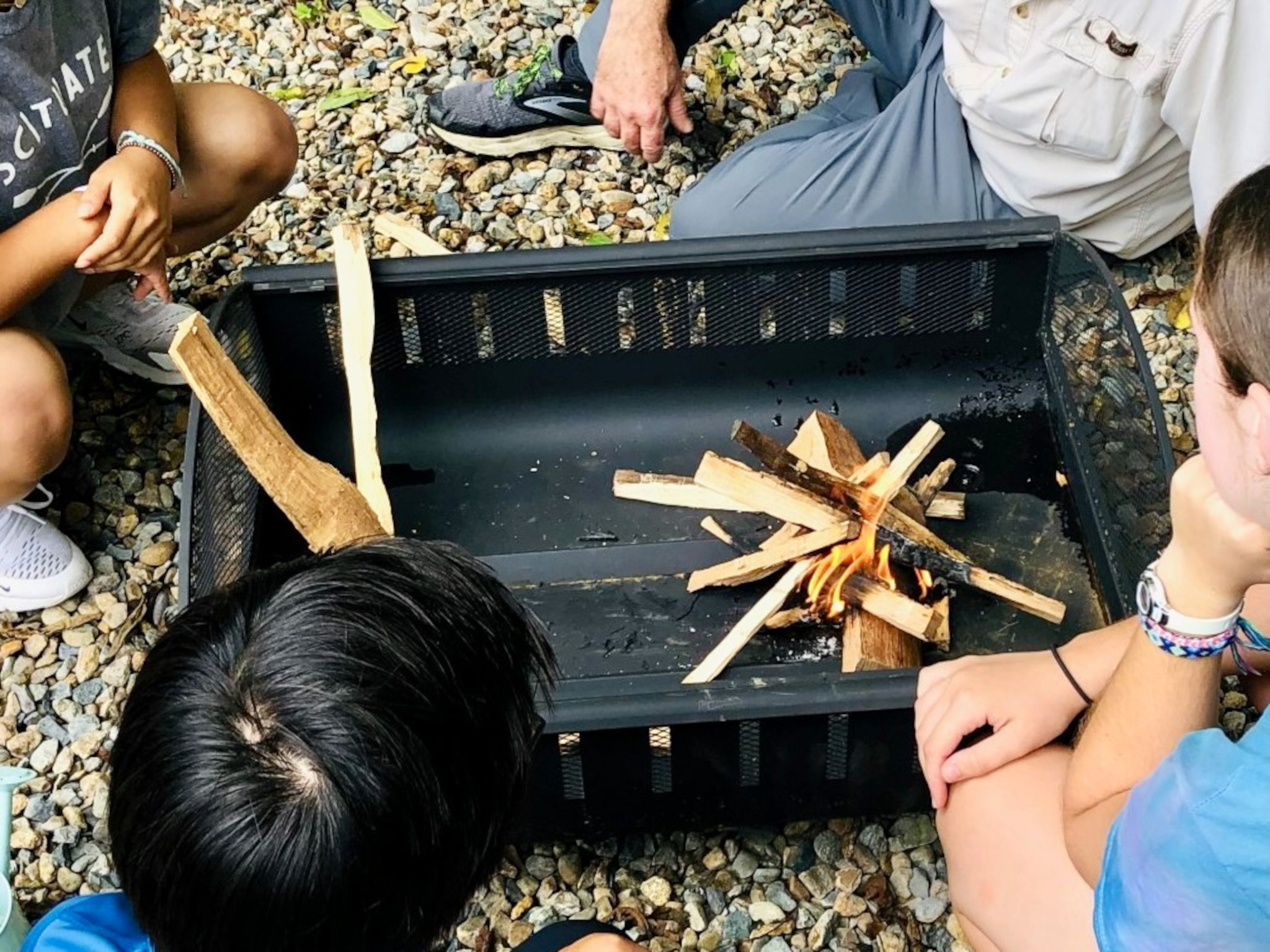
12:30-1:15 — Choice of activity, fire building or baking
1:15-2:00 — Choice of activity, nature craft project or whittling
2:00-2:30 — Ecology simulation game
2:30-3:00 — Closing circle
Wednesday
9:00-9:30 — Opening circle
9:30-10:30 — Practice setting up tents OR prep food for overnight
10:30-11:00 — Snack
11:00-12 noon — Practice setting up tents OR prep food for overnight
12 noon-12:30 — Lunch
12:30-2:30 — Field trip to third ecosystem
2:30-3:00 — Closing circle
Thursday
9:00-9:30 — Opening circle and name game
9:30-10:00 — Load up cars for overnight
10:00-12 noon — Drive to campground; have snack; play games and explore
12 noon-12:30 — Lunch
12:30-1:30 — Check in to campsite, set up tents
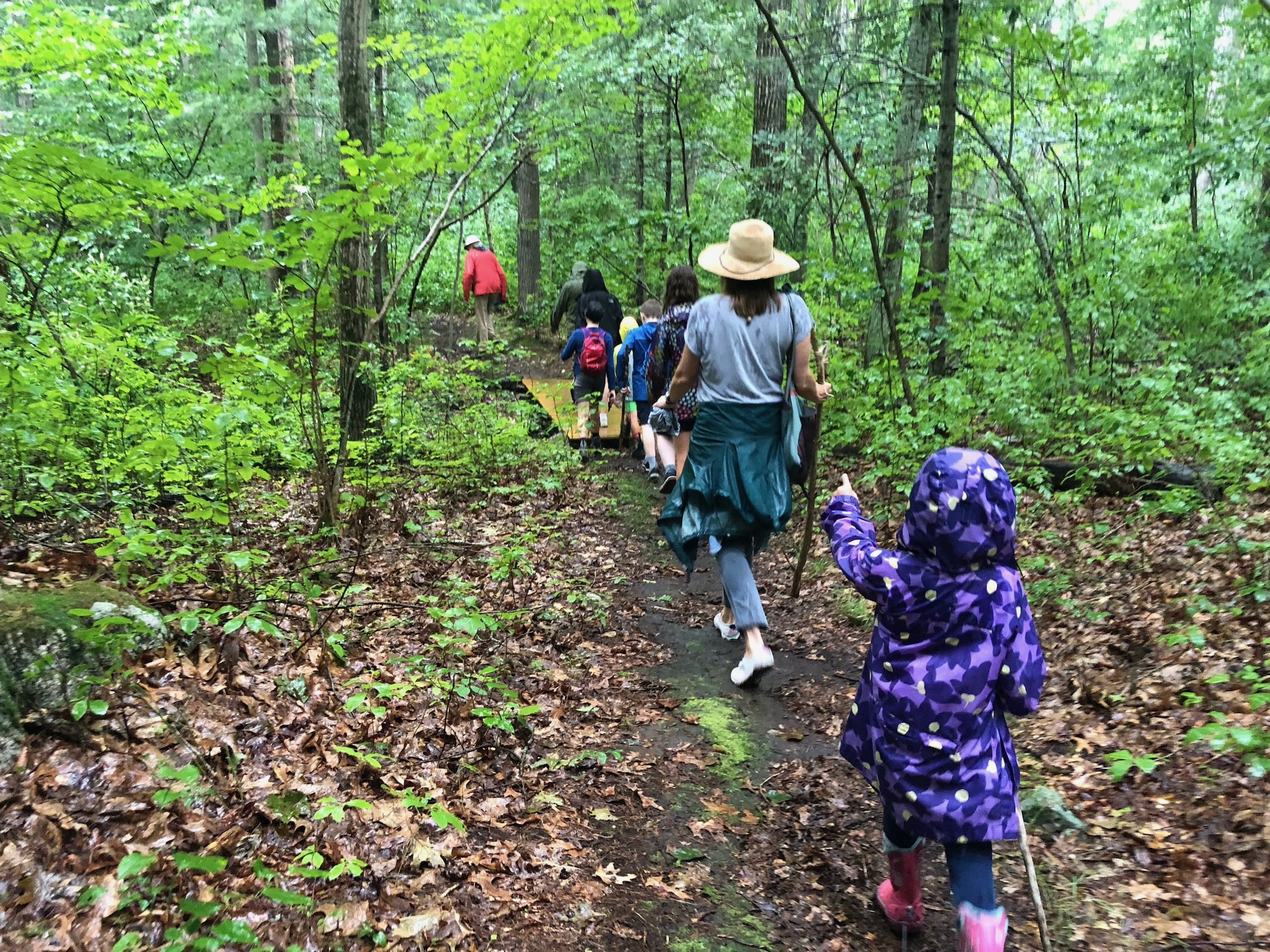
1:30-3:00 — Hike
3:00-3:30 — Snack at campsite
3:30-4:30 — Active games
4:30-5:00 — Down time (rest) at campsite
5:00-6:00 — Prep dinner, songs and stories
6:00-6:30 — Eat dinner, clean up
6:30-7:00 — Clean up after dinner; make sure everyone’s tent is ready for sleeping; start the campfire going
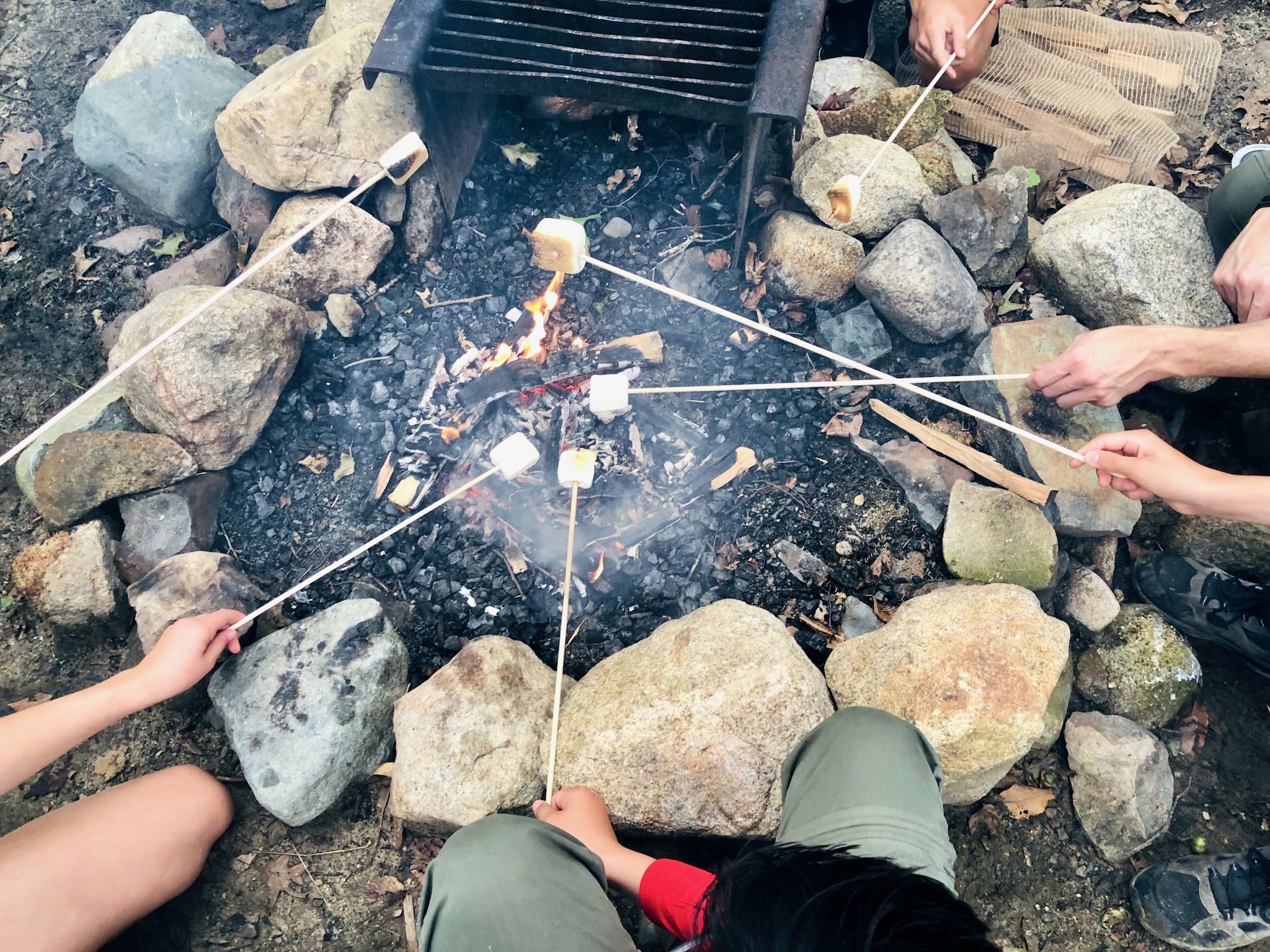
7:00-8:00 — Closing circle with s’mores
8:00-8:30 — Younger campers get ready for bed; possible dusk hike for older campers and junior counselors
9:00 — Lights out
Friday
6:00-7:00 — Early risers help with breakfast prep
7:00-9:00 — As people get up, everyone can cook their own pancakes and eggs for breakfast
8:00-9:00 — Clean up as stragglers are cooking breakfast
9:00-9:30 — Opening circle
9:30-10:30 — Break down tents and load cars
10:30-12 noon — Snack, then drive back to main site
12 noon-1:00 — Build campfire, roast hotdogs, eat lunch, make s’mores
1:00-2:00 — Choice of activity, nature crafts or whittling
2:00-2:30 — Active game
2:30-3:00 — Final closing circle